How Much Do Catastrophe Adjusters Make in a Month?
Jul 10, 2026
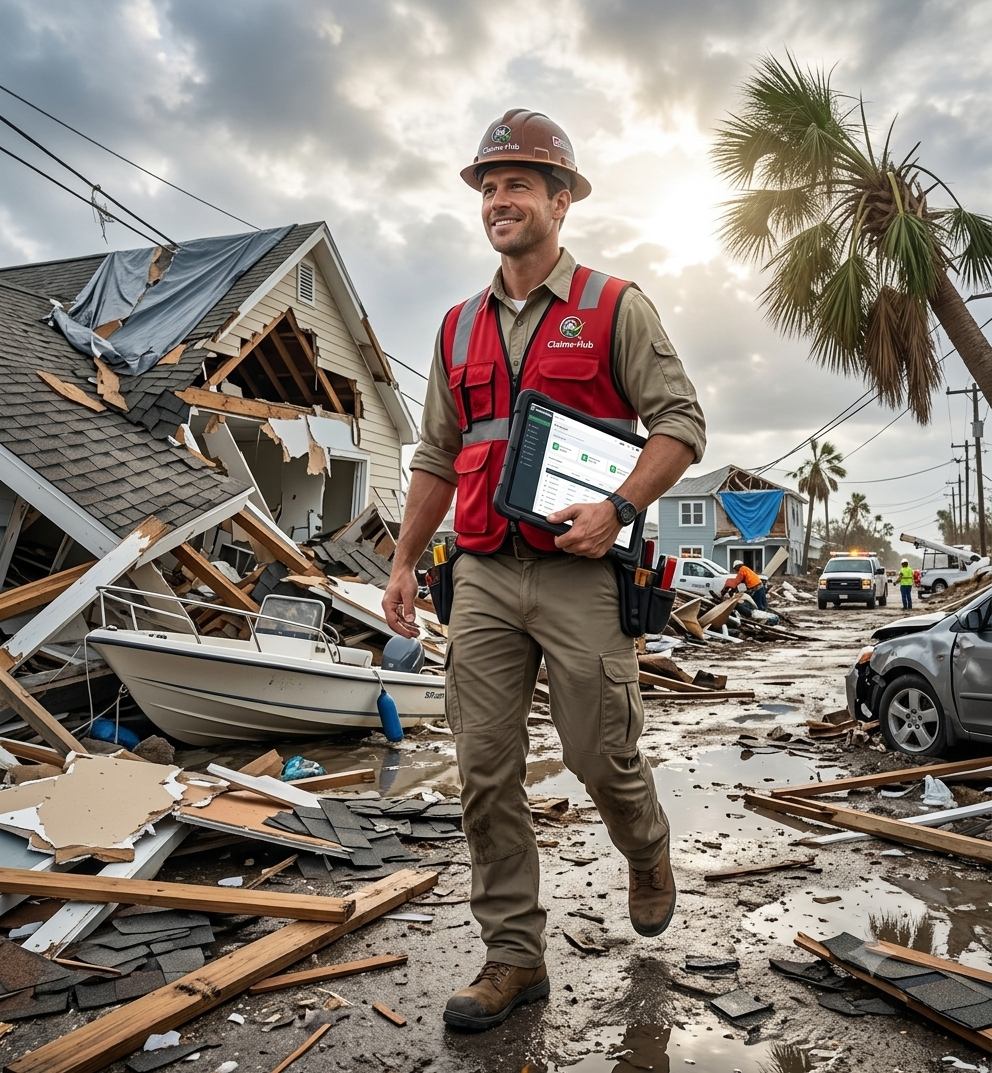
One of the most common questions asked by people considering a career in insurance adjusting is:
"How much do catastrophe (CAT) adjusters make in a month?"
The honest answer is...
It depends.
That may sound like a frustrating response, but it's the only accurate one.
A catastrophe adjuster working a major hurricane, tornado outbreak, wildfire, or hailstorm can earn significantly more during a busy deployment than many people earn during a typical month in other professions.
But there's another side to that story that often gets left out of YouTube videos and recruiting advertisements.
Those higher earnings come at a price.
- Long days.
- Long weeks.
- Months away from home.
- Significant personal expenses.
- Emotional stress.
- Physical exhaustion.
For the right person, catastrophe adjusting can be an incredibly rewarding career.
For others, it becomes one of the most difficult jobs they've ever experienced.
Let's take an honest look at what CAT adjusting is really like.
Why Can CAT Adjusters Earn So Much?
When a major catastrophe occurs, insurance carriers suddenly receive thousands—or even hundreds of thousands—of claims.
- Homes have been damaged.
- Businesses have been interrupted.
- Families are displaced.
- Communities are overwhelmed.
The carriers need experienced adjusters immediately.
That surge in demand creates opportunities for independent catastrophe adjusters to handle a large volume of claims over a relatively short period.
The faster an adjuster can inspect properties, write quality estimates, and close files, the greater their earning potential.
But speed alone isn't enough.
Accuracy matters just as much.
High Income Doesn't Mean Easy Money
From the outside, catastrophe adjusting can look exciting.
- Travel to new places.
- Work hard.
- Earn excellent money.
- Go home.
Sometimes that's exactly how it works.
Other times, reality is much different.
During a major deployment, it's common for adjusters to work:
- Early mornings
- Late evenings
- Seven days a week
- For weeks—or even months—at a time
The work doesn't stop when the inspections are finished.
Each day also includes:
- Returning phone calls
- Uploading photographs
- Writing estimates
- Completing reports
- Answering reviewer questions
- Scheduling inspections
- Managing emails
- Organizing claim files
Many adjusters discover that the inspection is only half the job.
Expenses Can Add Up Quickly
New CAT adjusters often focus on gross income.
Experienced CAT adjusters focus on net income.
While deployed, expenses may include:
- Hotels or temporary housing
- Fuel
- Vehicle maintenance
- Meals
- Equipment
- Ladders
- Safety gear
- Internet access
- Mobile office supplies
- Printing
- Software subscriptions
Without careful planning, those costs can significantly reduce your actual profit.
Running catastrophe claims successfully also means running your work like a business.
You're Helping People on Some of the Worst Days of Their Lives
One part of catastrophe adjusting that isn't discussed often enough is the emotional side of the work.
You'll meet families who have:
- Lost their homes.
- Watched trees crash through their roofs.
- Seen floodwaters destroy everything they owned.
- Been displaced for weeks or months.
- Lost treasured family possessions.
Many policyholders are frightened.
Some are frustrated.
Others simply don't know what comes next.
As an adjuster, you're not just documenting damage.
You're often one of the first people helping them begin the recovery process.
Professionalism, patience, and empathy matter just as much as technical knowledge.
The Stress Is Real
People often assume the hardest part of catastrophe adjusting is climbing roofs.
Sometimes the hardest part happens after you return to your hotel.
- The claim load keeps growing.
- Voicemails pile up.
- Emails continue arriving.
- Deadlines approach.
- Reports still need to be written.
- Photos need to be uploaded.
- Tomorrow's inspections need to be scheduled.
It's mentally exhausting.
Even experienced adjusters can feel overwhelmed during a major deployment.
Why Many New CAT Adjusters Quit
Every year, enthusiastic new adjusters enter catastrophe work believing they're ready.
Some discover very quickly that the pace is far more demanding than expected.
The reasons vary, but common challenges include:
- Managing large claim inventories
- Keeping up with documentation
- Writing estimates efficiently
- Learning carrier requirements
- Working long hours without days off
- Being away from family
- Handling constant pressure
- Balancing inspections with paperwork
Many talented people leave the industry not because they lack ability, but because the workload becomes overwhelming.
Organization Becomes Your Greatest Asset
Successful catastrophe adjusters develop systems.
They organize:
- Inspection schedules
- Photographs
- Notes
- Estimates
- Reports
- Carrier requirements
- TPA expectations
- Follow-up tasks
The more organized you become, the more efficiently you work.
That efficiency often has a direct impact on both your income and your stress level.
Technology Has Changed CAT Adjusting
Today's adjusters have access to tools that simply didn't exist a decade ago.
Technology now assists with:
- Aerial imagery
- Roof measurements
- Digital documentation
- Mobile estimating
- Photo organization
- Building code research
- AI-assisted estimate review
- Report generation
These tools don't replace the adjuster.
They help the adjuster work more efficiently during periods when every hour counts.
How Claims-Hub Helps During CAT Deployments
Claims-Hub.com was created with one simple goal:
Help adjusters spend less time fighting paperwork and more time handling claims.
Catastrophe deployments are demanding enough without unnecessary revisions, overlooked estimate items, or hours spent staring at a blank report.
Claims-Hub helps streamline several of the most time-consuming parts of the claim process.
Claim Review
Before submitting an estimate, Claims-Hub can help identify:
- Potential missing scope items
- Estimate inconsistencies
- Documentation weaknesses
- Common reviewer concerns
- Opportunities to improve file quality
Catching these issues before submission can reduce revisions and help keep claims moving.
Code Search
Building code requirements can vary significantly by jurisdiction.
When you're deployed outside your normal territory, remembering every local requirement isn't realistic.
Claims-Hub helps research applicable code requirements so adjusters can build more complete estimates with greater confidence.
Report Writer
After a long day in the field, many adjusters still face hours of report writing.
Claims-Hub helps organize inspection information into structured report drafts, reducing repetitive writing and allowing adjusters to focus on reviewing and finalizing their work.
When you're handling dozens of claims, saving even 20 or 30 minutes per file can make a meaningful difference over the course of a deployment.
Success Isn't Measured Only by Income
People often ask how much catastrophe adjusters make.
A better question might be:
How many quality claims can you consistently complete without sacrificing accuracy or burning yourself out?
The most successful CAT adjusters aren't simply the fastest.
They're the ones who combine efficiency with organization, professionalism, empathy, and high-quality work.
Those qualities lead to stronger relationships with carriers and TPAs—and more deployment opportunities in the future.
Final Thoughts
Catastrophe adjusting offers the opportunity to earn exceptional income during major weather events, but those earnings are accompanied by long hours, significant responsibility, emotional challenges, and considerable personal discipline.
It's not an easy career, but for adjusters who enjoy helping people, solving problems, and working in fast-paced environments, it can also be one of the most rewarding.
As the industry continues to evolve, modern technology is helping adjusters handle increasing workloads more efficiently. Tools like Claims-Hub.com were developed with that goal in mind: helping adjusters review estimates, research building code requirements, streamline report writing, and reduce unnecessary revisions so they can spend less time buried in paperwork and more time serving policyholders.
At the end of the day, catastrophe adjusting isn't just about earning more.
It's about helping families recover while building a career that rewards preparation, professionalism, and continuous learning.
About the Author
Douglas Castro is a licensed General Adjuster and founder of Claims-Hub.com. Drawing on real-world property claims experience, he developed Claims-Hub to help adjusters improve estimate quality, simplify documentation, and manage the demanding workloads that come with today's property and catastrophe claims.