How to Learn Symbility Software
Jul 10, 2026
Mastering the Software Is Only the Beginning of Becoming a Successful Insurance Adjuster
By Douglas Castro, General Adjuster
If you're considering a career as an insurance adjuster, you've probably heard two software names more than any others: Xactimate and Symbility (now part of Cotality). Both are professional estimating platforms used throughout the property insurance industry.
One of the questions new adjusters ask most often is: "How do I learn Symbility?" Fortunately, the answer is easier today than it was just a few years ago.
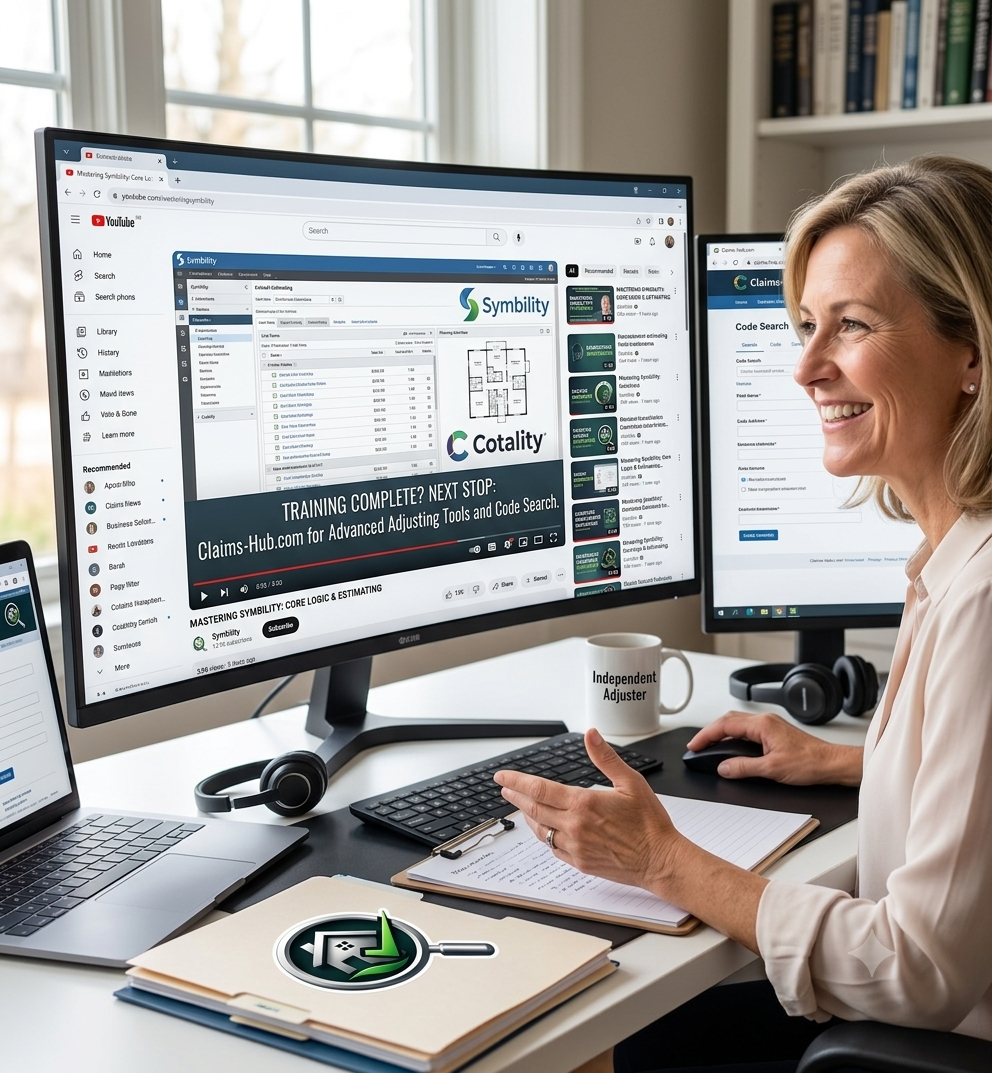
Cotality has produced several excellent training videos on YouTube that walk users through the fundamentals of the software. If you take the time to work through those lessons, practice creating estimates, and become comfortable navigating the interface, you'll build a solid foundation for using Symbility in the field.
But here's the part almost no one tells new adjusters... learning Symbility is only the first step. The real learning begins after you receive your first assignment.
Start With the Official Training
If you're completely new to Symbility, begin with the official instructional videos provided by Cotality. They cover topics such as:
- Creating a claim
- Navigating the interface
- Building an estimate
- Sketching structures
- Adding line items
- Organizing rooms
- Using price lists
- Reviewing estimates
- Completing claim documentation
The training is well organized and provides an excellent introduction to the software. Spend time practicing. Create sample estimates. Rebuild rooms. Experiment with different claim scenarios. The more comfortable you become inside the software, the more confident you'll be when real claims begin arriving.
Is Symbility Easier Than Xactimate?
Every adjuster has a favorite. Having worked with both platforms, my opinion is that many new users find Symbility slightly easier to learn. One reason is its intuitive drag-and-drop workflow. Many estimate components can simply be selected and placed directly into the sketch, making the estimating process feel more visual.
For someone who has never written an estimate before, this approach can shorten the learning curve. That said, Xactimate has continued to evolve over the years and now incorporates many workflow improvements of its own. Both platforms are extremely capable. Both are used by major insurance carriers. Both require practice.
Ultimately, success depends less on which software you use and more on understanding construction, documenting damage accurately, and writing complete estimates.
The Biggest Surprise Comes After Training
Here's where many new adjusters run into trouble. You finish the training. You understand the software. You pass your licensing exams. You sign up with an independent adjusting firm or a third-party administrator (TPA). Then one morning you receive your first assignment.
Along with that assignment comes:
- Carrier guidelines
- TPA procedures
- Claim instructions
- Required forms
- Documentation standards
- Reporting deadlines
Then comes the sentence every new adjuster eventually hears: "Good luck."
At that moment, many new adjusters experience what I call the "deer in the headlights" moment. Because suddenly the software isn't the difficult part anymore. The claim is.
Knowing the Software Doesn't Teach You the Job
Neither Symbility nor Xactimate was designed to teach you how to adjust insurance claims. They estimate repairs. They don't teach you carrier-specific expectations, TPA onboarding procedures, required inspection photographs, documentation standards, building codes, manufacturer installation requirements, professional report writing, file submission requirements, or how reviewers evaluate your work.
Those skills are developed through experience. Unfortunately, many adjusters gain that experience only after receiving returned files and reviewer comments.
You're Suddenly Working Against the Clock
One of the biggest adjustments for new independent adjusters is time. Claims don't wait. Deadlines don't move. Policyholders expect communication. Carriers expect documentation. TPAs expect compliance. And every hour spent trying to figure out what you may have missed is an hour you're not inspecting the next claim.
The pressure can feel overwhelming. That's why so many talented new adjusters become discouraged during their first year. Not because they can't estimate. Because they haven't yet learned everything surrounding the estimate.
The Real Challenge Is Building Complete Files
Experienced adjusters understand that a successful claim file includes much more than an accurate estimate. It also includes:
- Thorough documentation
- Clear photographs
- Accurate measurements
- Proper scope notes
- Strong narratives
- Applicable building code considerations
- Professional reports
- Complete claim support
These are the items reviewers evaluate every day. And they're the areas where newer adjusters often need the most guidance.
Building Codes Don't Care Which Estimating Software You Use
Whether your estimate is written in Symbility or Xactimate, building codes still apply. You may need to account for drip edge, ice and water barrier, starter shingles, flashing, ventilation improvements, safety glazing, handrails, and other jurisdiction-specific requirements. Knowing where to research these requirements—and recognizing when they apply—is part of becoming a successful adjuster.
Report Writing Is Another Learning Curve
Many new adjusters assume the estimate is the final product. It isn't. Most claims also require detailed reports explaining cause of loss, damage observed, inspection findings, scope of repairs, supporting documentation, and additional observations. Writing professional reports often takes almost as much practice as writing estimates.
How Claims-Hub Helps New Adjusters
Claims-Hub.com was built because I saw the same pattern over and over again. New adjusters weren't struggling with the software. They were struggling with everything surrounding the software. Claims-Hub acts as a professional assistant designed to help improve the quality of your claim file before it reaches the reviewer. Its goal isn't to replace your judgment. Its goal is to help you build confidence while reducing avoidable mistakes.
Current tools include:
- Claim Review — Review your estimate for missing scope items, documentation weaknesses, estimate inconsistencies, opportunities to strengthen your file, and common reviewer concerns. Think of it as having another experienced set of eyes before submission.
- Code Search — Research applicable building code requirements that could affect your estimate. This helps reduce the chance of overlooking code-related repairs that may impact the scope of work.
- Report Writer — Professional reports often take adjusters significant time to prepare. Claims-Hub helps organize the information you've already gathered into structured report drafts that you can review, edit, and finalize. Instead of starting from a blank page, you start with a professional foundation.
The Software Doesn't Make the Adjuster
I've met adjusters who can navigate estimating software incredibly fast. I've also met adjusters who produce exceptional claim files while working at a slower pace. Speed comes with experience. Quality comes with knowledge. The best adjusters understand construction, communicate well with policyholders, document their work thoroughly, and continually improve their skills. The estimating software is simply one of the tools they use to accomplish that.
Advice for New Adjusters
If you're just beginning your career:
- Complete the Symbility training.
- Practice every day.
- Learn construction.
- Study building codes.
- Read carrier guidelines carefully.
- Ask questions.
- Accept feedback.
- And don't hesitate to use modern tools that help you improve your work.
Every experienced adjuster started exactly where you are today. The learning curve is real—but it doesn't have to be traveled alone.
Final Thoughts
Learning Symbility is an important milestone, and the official training resources provide an excellent place to begin. But becoming a successful insurance adjuster requires much more than mastering estimating software. The real challenge lies in understanding carrier expectations, documenting losses thoroughly, writing professional reports, researching applicable building codes, and consistently producing claim files that withstand review.
That's where experience—and the right tools—make all the difference. Claims-Hub.com was created to help shorten that learning curve by giving adjusters practical assistance before they submit their files. Whether you're handling your first assignment or your five-hundredth, having an extra layer of review and guidance can help you work with greater confidence, improve the quality of your documentation, and spend less time correcting avoidable mistakes.
About the Author
Douglas Castro is a licensed General Adjuster and founder of Claims-Hub.com. After years of working property claims and seeing the challenges new adjusters face beyond estimating software, he created Claims-Hub to help adjusters build stronger claim files, improve estimate quality, and navigate the complexities of modern property claims with confidence.